Cedar Hollow Oxford
Twelve acres inside Shotover, and what we do to keep it that way.
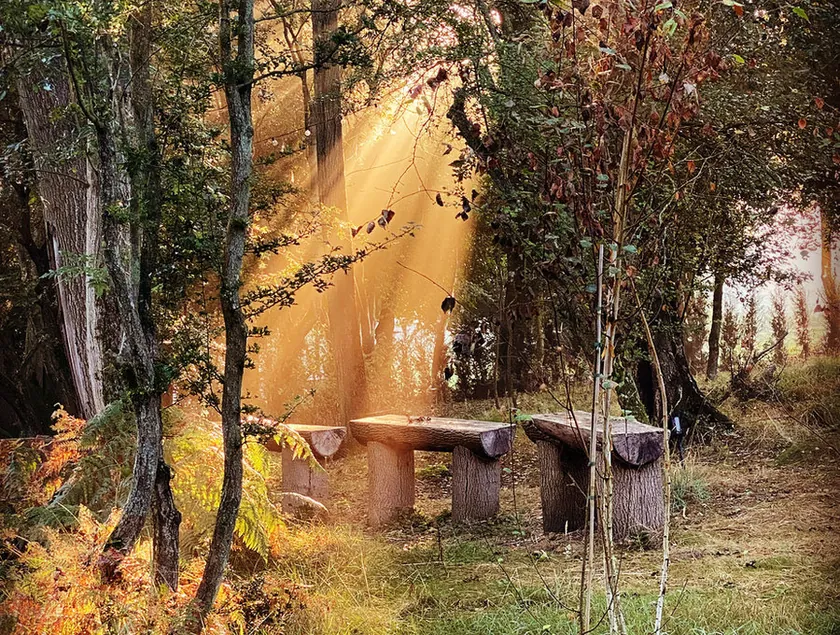
Cedar Hollow Oxford sits inside Shotover, on ground that was forest long before it was anything else.
The cabins are raised among mature trees rather than set on cleared ground, which means building around root systems and canopy and keeping each retreat small and tucked in. It is a slower way to build, and it is the reason the wood still reads as a wood.
What follows is what we actually do here. Where a claim is measured or assessed by someone other than us, we have said who.
Native trees planted each year. Log piles, deadwood and wildflower zones left as microhabitat. External lighting on timers and kept low, so bats and owls still have their dark.
Six active hives, and membership of the British Beekeepers Association. The mixed orchard of fruit and nut trees feeds the bees and the birds; guests go home with a jar of the honey.
Salvaged stone, antique furniture and reclaimed wood throughout, including beams rescued from the church where C. S. Lewis is buried. Reuse is the default, not the flourish.
Air source heat pumps, which draw around three times less energy than a conventional system, with low-energy lighting, efficient log burners and insulation to match.
Refillable cleaning and toiletry products, reusable cloths, composting for food and garden waste, and a move to well water to take pressure off the mains.
An hour of free EV charging, bicycles to rent, and walking and cycle routes from the door, so a car-free day here is genuinely possible.
The Oxfordshire woodland holds a Green Tourism Gold award, the highest grade given by the independent body that assesses tourism businesses on energy, waste and their impact on the places around them.
We also measure and offset our carbon footprint each year through Carbon Footprint Ltd, and our planning work is done with Mark Doodes Planning, so that what gets built sits inside the landscape rather than on top of it.
A private wood can still be of public use. We open ours for refugees and volunteer groups, and have hosted Oxford Art Week and the Congenital Anaemia Network.
Bat walks, orchard tours and a spring litter pick run through the year, and guests are welcome at them.
Most of what keeps the wood intact is simple, and our guests do most of it already.